


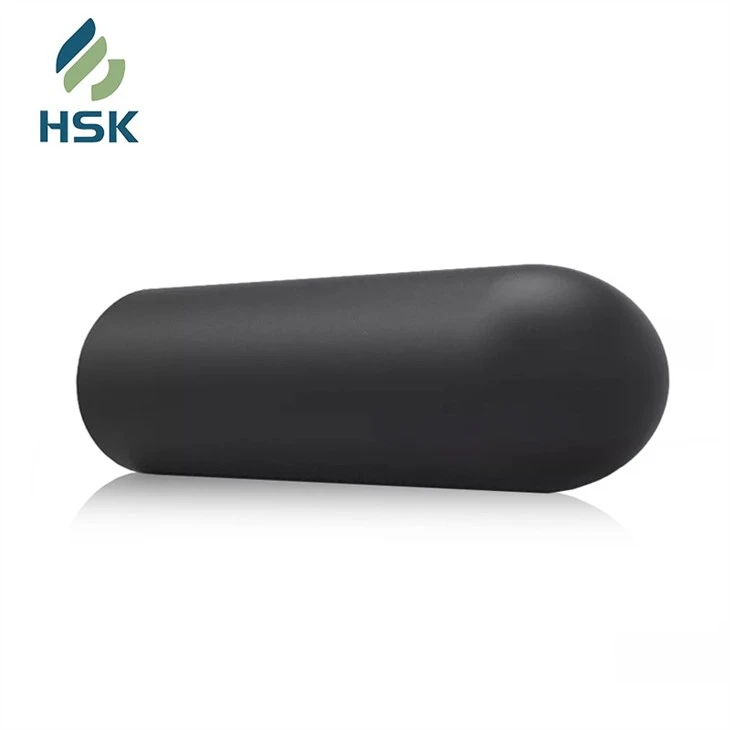
Flexible Rubber Cap
Raw Material: NBR,silicone rubber,FKM, EPDM, NR, Neoprene, etc
Color and Size: accept customized according to sample, Pantone code,RAL code; there are standard and non-standard sizes
Send Inquiry
Product Details ofFlexible Rubber Cap
Raw Material
Our Flexible Rubber Cap compound from world class suppliers or domestic rubber supplier and customized pantone code is available, hardness from 30 to 90 Shore A.
Size
Standard size with our current mold or customized according to your sample or drawing( 2D, 3D drawing , format STP, DWG, PDF , etc)
Quality and Certificate
We execute ISO9001 quality system and our Flexible Rubber Cap has passed ROHS/Reach/WARS certificate.
Mold and tooling
In house tool making and free of tooling charge for standard rubber cap, the mould parting line will be sent to customer confirmation.
Management and quality tracking: Strict material traceability under ERP system.
Flexible Rubber Cap process flow
PO confirm---Develop mold according to drawing or sample---Develop chemical formula according to specifications---Mix the raw material as per formula---Prepare and Install the mold on the machine---Preform the rubber compound---Put the compound into mold and vulcanization with certain temperature and pressure---After a while, remove the goods from the mold---Trimming the flash---Inspection---Packing---Shipping
Small MOQ:Have variety Flexible Rubber Cap in stock, so mini MOQ is acceptable.
Function: protect and seal .
Payment: T/T, L/C, Credit card. USD, RMB ,Euro and so on other currency is available.
Trade Term: EXW, FOB, CIF etc
Package: poly bag and carton(40*32*25CM). If you need pack by pallet or other customized package, it’s also ok.
Shipping method: By air, by sea, by express, multi-modal transport
Measurement of volume change
The liquid and gas media can affect the elastic colloid in different ways. Here people distinguish between chemical and physical media. Chemical media react with elastic colloids and can irreversibly change their properties, for example by separating links in the component chain (= loss of elasticity) or by forming more links (= stiffening of the material). Some media also attack the molecular chain of the elastic colloid and destroy it. Physically active media can cause two processes to occur simultaneously:
A. Absorption medium by elastic colloid
B. Separation of soluble mixture components (e.g. softeners) from elastic colloid.
This process can be determined by detecting changes in volume, either expansion if A is greater than B, or atrophy if B is greater than A.
The expansion process is generally irreversible.
The degree of volume change is limited by the following factors:
- Type of media
- The construction of elastic colloid
- Temperature
The thickness of the -
- Relaxation state of the colloid (greater effect in relaxation state, less effect in compression state)
Because of the mesh molecular structure of elastic colloids, expansion is limited, that is, they do not change after reaching a certain marginal value.
Extrusion marks of elastic colloid
The extrusion traces are measured after continuous extrusion according to DIN 53 517 or DIN ISO 815 or ASTM D 395. It represents the deformed part of the material being tested. There are many tests for elastic colloid, such as tensile strength, which can account for the quality and properties of the material. Extrusion marks are an important factor to be aware of before the material is used. Especially for sealing or backing, indentation is an important parameter.
Marks of compression
Indentation is a standard for evaluating the rebound of elastic colloid after prolonged continuous extrusion.
Method of measurement
To determine this parameter, use a cylindrical detector to squeeze 25% and leave it at a certain temperature for a certain amount of time. The temperature and medium (mostly air, but sometimes oil and other liquids) at which extrusion traces are tested depends on the material being measured, on its use and on its structure (e.g., the EPDM profile requires 24 hours at 70 degrees). 30 minutes after extrusion, the height was measured again at room temperature to measure the indentation.
An indentation of 0% means that the object is completely back to its original thickness (which is impossible in reality), and an indentation of 100% means that the object is completely deformed during the test without any resilience.
The calculation formula is: indentation (%)=(L0-L2)/(L0-L1)x100%
Indentation =% indicates the mark after extrusion
L0= height before measurement
L1= height in measurement
L2= measured height
Tensile strength test
Each tensile strength test measures the following three values:
Tensile strength (sR) is the force (FR) achieved at the moment of tearing divided by the initial section (AO) of the body measured before the start of detection: sR=FR/AO(N/mm2)
Tension value (SX) is defined as the force (Fx) required for a given stretch (EX)(usually 100%) divided by the initial cross section (AO): Sx=Fx/AO(N/mm2)
Fracture tension (eR) is the percentage relationship between the length reached at the moment of fracture (LR-R0) and the initial length (L0) :
ER = "(LR-L0)/L0" *100(%)
Note
The Freudenberg Process Seals documents specify the tear strength,100% tension, and tear tensile parameters for all materials. These PARAMETERS ARE AFFECTED BY the degree of vulcanIZATION, FORMULATION ratio, fillERS (carbon black, softeners, anti-aging agents, etc.), storage CONDITIONS, and aging.
The practical significance
For example, a flange sealing ring is squeezed to a certain thickness during installation, creating pressure on the flange surface. Over time the pressure weakens because the colloid deforms. If the deformation part is too large, the pressure and sealing effect will be weakened, and there will be air leakage. The indentation value of planar colloid can not be greater than 40% at the temperature of long-term use.Note that:
The values of indentation can only be compared when the following parameters are consistent:
- Squeeze (usually 25%)
- Squeeze time (usually 24 or 72 hours)
- Temperature during extrusion (depending on the colloid being tested)
- Medium, in what medium (usually air)- Shape of the detector
Products Description


Our Factory


Product Application

Pump

Pipe

Food industry

Water treatment

Medical devices

Chemical industry

Electric appliances

Hydraulic and pneumatic

Oil and gas

Aerospace

Agriculture

Auto industry

Mechanical automation

Mining

New energy

Shipbuilding
Our Certificate


Hot Tags: flexible rubber cap, China, manufacturers, suppliers, factory, custom, wholesale, Rubber Cap For Electronic, Silicone Chair Cap, Rubber Furniture Leg Cap, 2x2 Rubber End Cap, Flexible Rubber Cap, Rubber Cap
Previous
Rubber Cap for PipeNext
No InformationSend Inquiry
